
Welcome to Rootlet: why we built a UK course marketplace
Sat, 10 Oct 2026
Follow the stories of academics and their research expeditions

If you're good at something people want to learn, you can turn that knowledge into an online course and earn from every sale. This guide explains how teaching on Rootlet works, from applying to getting paid, what you're responsible for as an instructor, and what research on online video tells us about making a course that learners actually finish.
Rootlet is built around practical skills taught by people who use them. You don't need a teaching qualification. What matters is that you genuinely do the thing you teach, whether that's bookkeeping, baking, photography, coding or anything else, and that you can explain it clearly from the basics up. Learners can tell the difference between someone reading from a script and someone sharing what they do every day.
Start on the become an instructor page. Tell us about your experience and what you'd like to teach. Once your application is approved, you'll get access to your instructor dashboard.
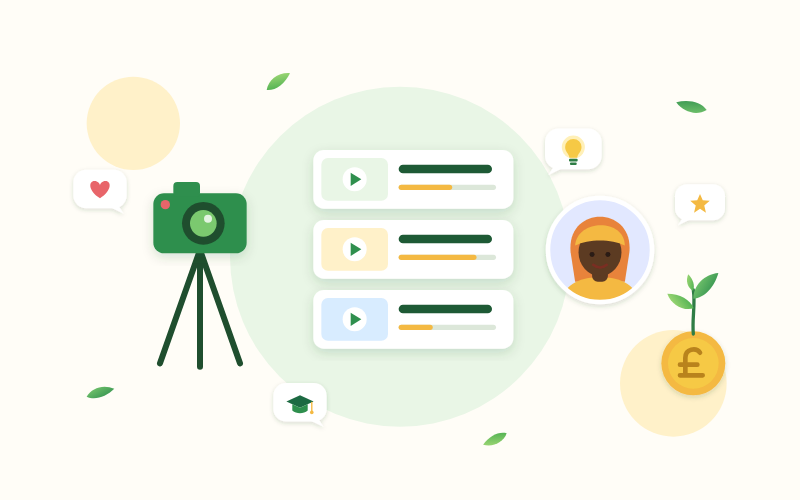
From your dashboard you create the course, add a title, description, category, level and thumbnail, then organise it into sections and lessons. Lessons are usually videos, and you can add supporting material and quizzes. On Rootlet, lessons unlock one at a time as learners watch, so plan them in a logical order where each one builds on the last.
You choose your course price. We may review a course before or after it goes live, and we can refuse or remove courses that don't meet our quality standards or terms, so it's worth checking your course against the tips further down before you submit it.
When a learner buys your course, you receive the revenue share shown in your instructor dashboard, less payment processing fees and any refunds. Payouts are made according to the payout schedule and minimum shown in your dashboard. As your sales grow you'll also earn instructor badges, from Seedling Seller at 10 sales up to Ancient Oak Seller.
Learners can ask for a full refund within 14 days of purchase as long as they've watched less than 30% of the course. The full details are in our refund policy. A refunded sale is taken off your earnings. To protect instructors, we may refuse refunds where we see signs of abuse, such as repeated buy-and-refund activity. The best protection is a course that delivers what its description promises, so be specific and honest about who the course is for and what learners will be able to do by the end.
One of the largest studies of online course video looked at 6.9 million viewing sessions across four edX courses. The researchers, from MIT and edX, compared how different video styles related to how long students kept watching and whether they went on to try the practice questions. It was an observational study rather than a controlled experiment, but its findings are a useful guide. You can read the full paper by Guo, Kim and Rubin (2014).
Video length was the strongest predictor of engagement. However long a video was, the typical viewer stopped watching at around 6 minutes, and the share of students who went on to attempt the practice questions fell from 56% to 31% as videos got longer. Break long topics into short lessons that each cover one idea.
A course whose lectures were planned specifically for online learning kept students more engaged than one cut up from an older classroom recording. Write a short outline for each lesson before you record, and speak to the learner as if they're sitting next to you.
In the study, an informal course filmed at an office desk did better than a studio-filmed one. The researchers suggest that a personal feel matters more than expensive production. Clear sound, good light and a steady camera go a long way.
Videos that switched between the instructor's face and slides or a screen did better than slides alone, and tutorials where the instructor drew or wrote things out by hand held attention longest. Let learners see you, then show them exactly what you're doing.
Instructors who spoke faster generally kept students more engaged, which the researchers put down to enthusiasm rather than speed. You don't need to slow down artificially. Cut out long pauses and filler in the edit instead.
Short quizzes and a practical project help learners remember what you teach, because testing yourself strengthens memory more than rewatching. Add a few quiz questions to each section and finish the course with a real task learners can complete with their new skill.
If you have a skill people want to learn, we'd love to hear from you. Apply to become a Rootlet instructor, or email us at support@rootlet.co.uk with any questions first.
Sat, 10 Oct 2026
Sat, 10 Oct 2026

Rootlet is a UK online course marketplace where you can learn practical skills from expert instructors. Browse video courses in business, tech, creative and personal development, and learn at your own pace.
Leave a comment