Course description
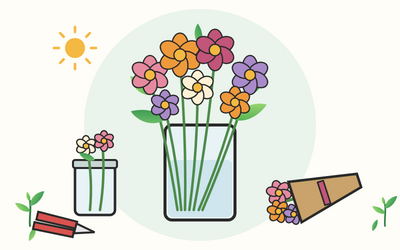
Whether you'd like a jug of garden flowers on the kitchen table, a bouquet for a birthday or a display for a village hall, this course takes you from your first cut stem to a planned, costed centrepiece and a matching hand-tied bouquet. It's about arranging flowers at home and for friends, family and community spaces, with no floral foam.
You start with the tools and a safe workspace, then learn where to find flowers and foliage, including picking within the law, and how to condition every kind of stem so it lasts. You learn the design principles, from the colour wheel to proportion, balance and space, and the foam-free mechanics that hold stems in place: chicken wire, pin frogs, tape grids, moss and twigs. Then you make vase arrangements, spiral hand-tied bouquets with a water bubble, low table designs with candles kept safe, jam jar groups, buttonholes and corsages, wreaths, seasonal displays and dried flowers. Section 9 covers planning flowers for an event, counting stems, budgeting, setting up in halls and churches, photographing your arrangements, and an outline of what to know before you sell.
There are 10 sections and 50 written lessons, each with a worked example, common slips, questions people often ask and a short exercise to try, and each section ends with a short quiz. You follow Antje, a receptionist in Romsey, from her first jug of tulips in January to the centrepiece and bouquet she makes for her mother's 80th birthday in October, with Gesche, who runs the church flower rota, and Fokko, her neighbour with an allotment, alongside. Every section has a practice pack with a worksheet, an answer key and a cheat sheet, plus step guides with simple line drawings, a conditioning checklist, a seasonal planner, colour wheel sheets, recipe cards, a design worksheet with answers, an event planning checklist, a glossary and a stem count and costing spreadsheet with worked examples.
What you'll learn
- Tools and a safe workspace: florist's scissors, secateurs and the knife used safely, buckets, containers and sundries, a safe workspace, and your first jug arrangement.
- Finding flowers and foliage: buying fresh stems, picking within the law and the Countryside Code, growing a few plants for cutting, and British flowers through the seasons.
- Conditioning and caring for cut flowers: clean buckets, stripping and cutting stems, flower food, woody, sappy and hollow stems, daffodils, and plant safety from official sources.
- Design principles: the colour wheel and six colour schemes, form, texture, the roles of flowers, proportion, balance, focal point, movement, line and space.
- Mechanics without floral foam: chicken wire, pin frogs, tape grids, moss, twigs and water tubes, with a fair look at floral foam and why the course does without it.
- Vase arrangements and hand-tied bouquets: vase and front-facing designs, the spiral hand-tied bouquet, tying and trimming, and wrapping with a water bubble.
- Table designs, jars and flowers to wear: low and long table designs, candles kept safe, groups of jam jars and bud vases, buttonholes and corsages.
- Wreaths, seasonal displays and dried flowers: foam-free wreaths, displays for spring, summer, autumn and Christmas, and drying, storing and arranging dried flowers.
- Events, community spaces, photos and selling: planning flowers for an event, counting stems and budgeting, setting up in halls and churches, photographing your work, and selling in outline.
- Final project: a seasonal table centrepiece and a matching hand-tied bouquet, with a worked plan, recipe and costing, made step by step and reviewed.
Who it's for
Anyone who would like to arrange flowers with confidence, at home, for friends and family, or for a church, hall or community event. You don't need any experience. If you'd like to grow your own flowers for cutting, Grow Your Own Cut Flowers: Plan, Sow and Pick a Cutting Patch Through the British Seasons covers the growing in detail, and Event Planning for Beginners: Budgets, Venues, Suppliers and Running the Day covers planning the whole of an event.
What this course is, and isn't
This is a beginner's course in flower arranging. It is not a floristry qualification. The safety points, the law on picking wild plants, the candle advice and the outline of selling are based on official UK sources, including the RHS, the NHS website, legislation.gov.uk, GOV.UK and a fire and rescue service, but the course isn't legal or tax advice. Prices in the worked examples are made up. Antje, her family, Gesche, Fokko and every other person in the course are fictional.