Course description
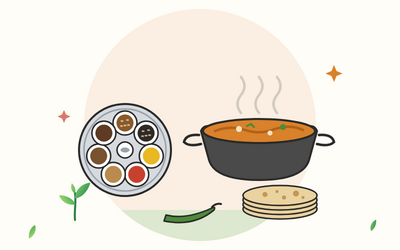
If you've cooked with jars of curry sauce and want to cook from scratch instead, this course shows you how, one skill at a time. You'll learn how spices behave, how to build a masala that tastes rich rather than raw, and how to cook dals, vegetable dishes, curries, rice and breads that work together as a home meal.
Indian food isn't one cuisine. It's many regional and family traditions, and every household cooks a little differently. The recipes here are home-style dishes written for a UK kitchen, with UK measures and oven settings: one way among many, not the only way.
There are 10 sections and 50 written lessons, and each one ends with a short, practical exercise. You follow Karen, an office manager in Gravesend, through a year of cooking with help from her neighbour Satwant and friends from work: the burnt tadka, the sticky rice, the chapatis that wouldn't puff, her husband's 50th birthday lamb curry, and a final meal for six planned around a guest's tree nut allergy. Every section has a practice pack with a worksheet, example answers, a cheat sheet and recipe cards, plus tools such as a kitchen safety card, a spice tin planner, a pulse cooking guide, a rice card, a deep-frying safety card, a meal planner, a recipe scaler and a freezer log.
What you'll learn
- Getting started: many regional kitchens rather than one cuisine, a sensible kit, kitchen safety, and how the recipes, heat levels and scaling work.
- Spices: whole and ground spices, a starter spice tin, toasting and grinding your own garam masala, tempering spices in hot fat, and keeping spices fresh.
- The masala base: onions cooked to the right stage, ginger, garlic and green chilli, cooking a masala until the oil separates, three sauces, and balancing heat, salt, sour and sweet.
- Dals and pulses: split and whole pulses, tarka dal, chana dal, rajma from dried kidney beans cooked safely, and chole in a pan or a pressure cooker.
- Vegetables: dry sabzi and aloo gobi, saag, vegetable curries, okra without the slime, a cabbage thoran, and pairing a wet and a dry dish.
- Paneer, eggs, chicken and lamb: homemade paneer, matar paneer and paneer tikka, a home-style chicken curry, a slow-cooked lamb curry, egg curry, marinades and safe handling of raw meat.
- Rice: fluffy basmati, jeera and lemon rice, a one-pan pulao, a home-style chicken biryani, and the rules for cooling and reheating rice.
- Breads: atta dough, chapatis that puff, layered and stuffed parathas, naan in a home kitchen, and puris fried safely.
- Chutneys, raitas and snacks: fresh and cooked chutneys, raitas and salads, deep-frying safely, onion bhajis and pakoras, aloo tikki and chaat.
- Meals and routines: planning a balanced home meal, a weekly cooking routine, batch cooking and freezing, and a final project meal for family or friends.
Who it's for
Home cooks who can follow a recipe and want to move beyond jar sauces and takeaways. You don't need any special equipment to start: a heavy pan, a small pan for tempering and a flat pan for breads will do, and the course tells you what can wait.
What this course is, and isn't
This is a practical home cooking course. The food safety information, including rice, red kidney beans, chicken, leftovers, allergens, burns and deep-frying, is general guidance for home cooks based on advice from the Food Standards Agency, the NHS and fire and rescue services. It isn't professional food safety, medical or nutrition advice.