Course description

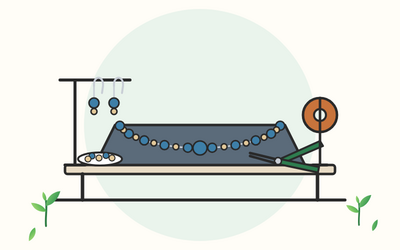
Would you like to make your own necklaces, bracelets and earrings? This course takes you from your first pair of pliers to a finished matching set, using beads, wire, thread, cord and ready-made findings at your kitchen table. There's no soldering and no costly equipment.

You begin with the five core tools and a safe, comfortable workspace. Then you learn about beads, stringing materials, wire and metals, and how to use findings such as jump rings, clasps, head pins and ear wires. You string and crimp necklaces and bracelets to the right length, make simple and wrapped loops, drop earrings and hoops, and move on to coils, wire components and a link bracelet. Later sections cover stretch bracelets, knots, macrame, bead weaving, colour and design. Finally, you learn to check, care for, photograph, cost and price your pieces, and what UK rules on hallmarking, metal content, product safety and children's jewellery mean if you'd like to sell.

There are 10 sections and 50 written lessons. Each lesson has a worked example, common slips, questions people often ask and a short exercise to try, and each section ends with a short quiz. You follow Luned, a parish council clerk in Lancaster who makes her first pieces and plans a small collection for a church hall craft fair, with help from Tjitske at her Tuesday beading circle. Every section has a practice pack with exercise sheets, answer keys and cheat sheets, plus project sheets with simple line drawings, tool and findings reference cards, a wire gauge and length chart, sizing guides, a design planner, a costing and pricing spreadsheet with a worked example, and finishing and selling checklists.


What you'll learn

  • Tools and a safe workspace: the five core tools and how to hold them, a bead mat, trays and measuring tools, eye protection, small parts, light, posture and breaks, and a first practice session.
  • Beads, stringing materials and metals: bead types and sizes, beading wire, thread, cord and elastic, wire thickness and temper, metals in plain words and nickel allergy.
  • Findings and jump rings: a tour of findings, opening and closing jump rings properly, clasps, head pins, eye pins, bead caps and ear wires.
  • Stringing, crimping and sizing: measuring necks and wrists, planning a strung piece, crimping a necklace, making a bracelet with a trial fit, and ring sizing.
  • Loops and earrings: simple loops, wrapped loops, matching drop earrings, wire hoops and simple wire shapes from a template.
  • Wirework, coils and links: coiling, wrapping a bead, making your own jump rings, hooks and connectors, and a wire link bracelet.
  • Stretch bracelets, knotting and macrame: stretch bracelets that last, knots that hold, knotting between beads, macrame basics and a sliding knot bracelet.
  • Bead weaving and design: bead weaving basics, ladder stitch and the daisy chain, colour, balance and proportion, and planning a small collection.
  • Finishing, care, photographs and pricing: a quality check for every piece, care and simple repairs, photographing jewellery with a phone, costing and pricing, and selling at fairs and online.
  • Selling legally, and your final project: UK hallmarking and describing metals, product safety and children's jewellery, a matching set of necklace, bracelet and earrings, and a mini collection plan.


Who it's for

Complete beginners in the UK who'd like to make jewellery for themselves, as gifts or to sell in a small way, and crafters who'd like to add beading and wirework to what they do. No experience is needed.


What this course is, and isn't

This is a practical beginner course. It doesn't teach soldering, and it isn't legal advice. The legal points come from official guidance from the UK Assay Offices, the British Hallmarking Council, Business Companion (Trading Standards), GOV.UK, legislation.gov.uk and the NHS, read on 1 November 2026. Rules and guidance change, so check the current pages before you rely on a detail. Luned, Tjitske and every other person in the course are fictional.

What will I learn?

  • Choose and use round nose, chain nose and flat nose pliers, flush cutters and crimping pliers, and set up a safe, comfortable workspace
  • Choose beads, stringing materials, wire thicknesses and tempers, and describe metals such as sterling silver, plated metal and silver tone accurately
  • Open and close jump rings properly, and choose clasps, head pins, eye pins and ear wires, including findings for sensitive skin
  • Measure necks and wrists, plan a strung piece and finish necklaces and bracelets with crimps, wire guards and crimp covers
  • Make neat simple and wrapped loops, matching drop earrings, wire hoops and simple wire shapes
  • Wind coils, wrap beads, make your own jump rings, hooks and connectors, and build a wire link bracelet
  • Make stretch bracelets that last, tie knots that hold, knot between beads and make a macrame sliding knot bracelet
  • Work ladder stitch and a daisy chain, and use colour, balance and a focal point to plan a small collection
  • Check, clean, care for, photograph, cost and price your pieces using a clear method
  • Understand UK hallmarking, the nickel, lead and cadmium limits, product safety duties and care with children's jewellery before you sell

Requirements

  • No experience is needed; the course shows you every technique from the start
  • A small set of jewellery pliers, flush cutters, safety glasses and a few beads, findings and copper wire for practice; lesson 1.2 explains what to buy
  • A table with good light, and a way to keep small parts away from babies, young children and pets
  • A way to open PDF files, and a spreadsheet app if you'd like to use the costing and pricing sheet

Frequently asked questions

Anyone in the UK who wants to make jewellery at home: complete beginners, crafters who'd like to add beading and wirework, and makers thinking about selling a few pieces at fairs or online. No experience is needed.

No. Every technique in the course uses hand tools, beads, wire, thread, cord and ready-made findings. Lesson 10.5 suggests learning soldering in person, with proper safety training, if you'd like to go further later.

Round nose, chain nose and flat nose pliers, flush cutters, safety glasses, a bead mat and a few beads, findings and copper wire to practise with. Crimping pliers come in at Section 4. Lessons 1.2 and 1.3 explain what to buy and what can wait.

No. Section 10 explains what official UK guidance on hallmarking, metal content and product safety said when it was read on 1 November 2026, but it isn't legal advice. For your own situation, check GOV.UK, ask your local Trading Standards service or contact one of the UK Assay Offices.

Yes, and the course shows you how to do it properly: costing and pricing, describing metals accurately, hallmarking, the nickel, lead and cadmium limits, product safety, children's jewellery and the trading allowance. It makes no promises about what you'll earn.

Yes. Every section has a practice pack with an exercise sheet, an answer key, a cheat sheet and worked examples, plus project sheets with simple line drawings, tool and findings reference cards, a wire gauge and length chart, sizing guides, a design planner, a costing and pricing spreadsheet, a finishing checklist, a selling checklist and the final project files.

Yes. Selling on Etsy from the UK: Set Up, Photograph, Price and Grow Your Shop; Product Photography for Small Businesses: Sell More with Better Photos; Smartphone Photography for Beginners: Take Better Photos with the Phone You Already Have; Embroidery for Beginners: Hand Stitches, Patterns and Your First Hoop Projects; and Self Assessment Tax Returns for the Self-Employed: A Step-by-Step UK Guide.

You get lifetime access, including any lessons we add later.

Yes. You can ask for a refund within 14 days of buying if you've completed less than 30% of the course. Email support@rootlet.co.uk.
Jewellery Making for Beginners: Beading and Wirework at Home

£29.99

Lectures

60

Quizzes

10

Skill level

Beginner

Expiry period

Lifetime

Certificate

Yes

✓ 14-day money-back guarantee if you have completed less than 30% of the course. Refund policy

✓ Secure card payment by Stripe

✓ Questions before you buy? support@rootlet.co.uk

Sold by Rootlet Academy Ltd, a UK company (no. 17529179).

Share this course

Related courses

Learn something new every week

One short, practical tip each Thursday, plus news when new courses open. Free, and you can unsubscribe in one click.

We'll never share your email. See our privacy policy.