Course description
If you'd like to paint with acrylics, this course takes you from your first tubes of paint to finished still lifes and landscapes, step by step, with a small kit and a safe, tidy way of working at home.
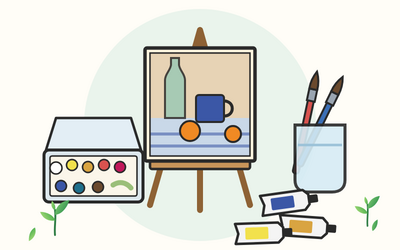
You learn what to buy and what can wait, how to set up a safe space, and where paint water and leftover paint should go. You learn how acrylics behave: how fast they dry, why colours darken as they dry, and how to keep paint workable. With eight colours named by pigment, you learn to mix greens, oranges, purples, greys and browns, and to judge value, temperature and saturation. Then you put it together: washes, blending, glazing and knife work, thumbnails and composition, a still life of a bottle, a mug and clementines, landscapes with skies, trees and water, painting from photos and from life, and finally finishing, varnishing in outline, framing and a final painting of your own.
There are 10 sections and 50 written lessons, each with a worked example, common slips, questions people often ask and a short exercise to try, and each section ends with a short quiz. You follow Maija, a part-time hospital ward clerk in Kendal who had tried watercolour, and Darejan, a retired school art technician who runs a Thursday morning painting group, from February to October 2026. Every section has a practice pack with a worksheet, an answer key and a cheat sheet, plus colour mixing charts and value scales to fill in, step-by-step guides with drawings made for the course, composition thumbnails, a viewfinder template, reference images drawn for the course, a practice planner and a project log.
What you'll learn
- Getting started with acrylics: what acrylic paint is and how it dries, student and artist quality, an eight-colour starter palette, brushes, knives, surfaces, a stay-wet palette and mediums.
- A safe and tidy painting space: fresh air and light, reading labels and pigments, good habits and what to do if something goes wrong, caring for brushes, and where paint water and leftover paint should go.
- How acrylics behave: fast drying and working with it, colour shift as paint dries, keeping paint workable, thin, creamy and thick paint, and your first swatch sheet.
- Colour: the colour wheel, mixing greens, oranges and purples, greys, browns and muted colours, value, temperature and saturation, mixing charts and a value scale.
- Brushwork and mark-making: holding the brush and basic marks, flat and graded washes, blending and soft edges, dry brush, scumbling and glazing, impasto and palette knife work.
- Drawing and composition for painters: seeing simple shapes, thumbnails and value sketches, placing the subject, focal points and leading the eye, transferring a drawing and toning.
- Still life, flowers and textures: choosing and lighting a still life, light, shadow and form, a still life step by step, reflections, shine and glass, and simple flowers and textures.
- Landscapes: simplifying a view, skies and clouds, trees and hedges, water and reflections, and distance.
- Working methods and practice: working from photos and your own reference images, painting from life, underpainting and layers, correcting mistakes, and a practice habit with critique and sharing.
- Finishing and your final project: finishing touches and knowing when to stop, varnishing in outline, framing and storing, and planning and painting a final project step by step.
Who it's for
Adults who'd like to paint with acrylics as a hobby, with no experience needed, including anyone who has tried watercolour and wants a medium that stays put once dry. If you'd like to practise drawing first, Drawing for Beginners: Line, Shape, Shading and Perspective from Scratch is a good place to begin. Watercolour Painting for Beginners: Washes, Colour Mixing and Your First Landscapes and Oil Painting for Beginners: Materials, Colour Mixing and Your First Still Lifes and Landscapes each teach their own medium.
What this course is, and isn't
This is a home acrylic painting course for adults. It doesn't recommend any paint maker or shop, and it names colours by their pigment names. The safety guidance points you to product labels and official advice, and it isn't medical advice. Maija, Darejan and every other person in the course are fictional.