Course description
You've learned the basics of SEO, and your site has grown. Now there are more pages than you can check by hand, Search Console is full of reports with long lists of reasons, and a developer wants to know whether a change will hurt your search traffic. This course is the next step: the technical side of SEO for a growing site, explained in plain English.
You'll learn how Google crawls, renders and indexes pages, how to read Google Search Console in depth, and how to control crawling and indexing with robots.txt, meta robots tags, status codes, redirects and canonical tags. Then you'll work on site architecture, sitemaps, Core Web Vitals, structured data, hreflang, JavaScript and HTTPS, before running a full technical audit, a content audit and a site migration.
There are 10 sections and 50 written lessons, and each one ends with a practical exercise for your own site or the practice data. You follow two made-up UK businesses through 2026: Whimbrel Outdoor, a walking and camping shop in Kendal with a UK and an Irish store, and Mizzen Guides, a Norfolk walking guide publisher that moves to a new domain. Every section has a practice pack with a worksheet, example answers, a cheat sheet and realistic practice files: Search Console exports, crawl exports, server log lines, redirect maps, robots.txt and sitemap examples, JSON-LD and hreflang examples, an audit report template and checklists.
What you'll learn
- How Google crawls, renders and indexes: discovery and crawling, what a server log shows, rendering and JavaScript, duplicate clusters and canonical URLs, and how to think like a technical SEO.
- Google Search Console in depth: Domain and URL-prefix properties, verification and users, the Performance report with regular expressions, URL Inspection, Sitemaps, Removals, manual actions and security issues.
- Controlling crawling and indexing: robots.txt rules and precedence, meta robots and the X-Robots-Tag header, the Page indexing report reason by reason, staging sites and HTTP status codes.
- Redirects, errors and duplicates: 301s and 302s, chains and redirect maps, 404s, soft 404s and out-of-stock products, canonical tags, faceted navigation and one version of every URL.
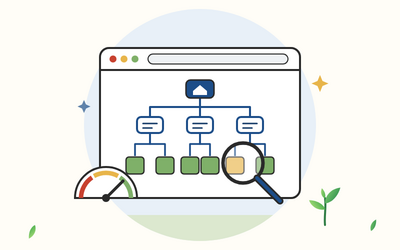
- Architecture, internal links and sitemaps: click depth and hub pages, internal linking and anchor text, breadcrumbs and pagination, XML sitemaps and sitemap index files, and finding orphan pages.
- Core Web Vitals and mobile-first indexing: LCP, INP and CLS, field and lab data, the Core Web Vitals report and PageSpeed Insights, practical fixes for templates and checking mobile pages.
- Structured data, hreflang, JavaScript and HTTPS: JSON-LD for products, organisations, breadcrumbs and articles, hreflang for UK and Irish sites, JavaScript SEO basics, and HTTPS, mixed content and hacked sites.
- Running a technical site audit: planning, crawling with a crawler, reading crawl data, prioritising fixes with a scoring sheet and writing a report people act on.
- Content audits, AI search features and measurement: content inventories, keyword cannibalisation, pruning and merging safely, AI Overviews and AI Mode as Google describes them, and Search Console and GA4 together.
- Migrations, developers and your final project: planning and launching a site move, writing tickets developers can act on, a full technical audit as your final project and a 90-day plan.
Who it's for
People who've finished a beginner SEO course, and owners and marketers of growing websites: online shops with hundreds of products, publishers with years of articles and service businesses with dozens of service or location pages. You don't need to write code. You'll read short examples of robots.txt, HTML, redirects and structured data, and every one is explained line by line.
What this course is, and isn't
This is a practical course built on Google's own documentation. It doesn't repeat beginner keyword research or on-page writing, and it doesn't recommend third-party SEO tools: every exercise works with Google Search Console, Google Analytics 4, a spreadsheet and any website crawler. Google changes its tools and features from time to time, so names and labels are given as they were at the time of writing, in October 2026. No technical fix guarantees rankings or traffic; the course shows you how to remove the barriers that stop good pages being found.