Course description
Do you need to work out what should change, and why, before anyone builds anything? This course teaches the core skills of business analysis from the beginning: understanding a problem, working with the people involved, mapping processes, writing requirements and making the case for change, in plain English with every term explained.
You start with what a business analyst does and how to frame a problem properly. Then you learn to find and map the people involved, draw out information with interviews, workshops, observation and surveys, and map processes as they are and as they could be. The middle of the course is practical: writing requirements and user stories with acceptance criteria, prioritising with MoSCoW, and describing data and business rules. Later sections cover options appraisal and the business case, analysis in agile and planned projects, acceptance checks, traceability and making sure the benefits arrive.
There are 10 sections and 50 written lessons. Each lesson has a worked example, common slips, questions people often ask and a short exercise to try, and each section ends with a short quiz. You follow Jenifry, a contact centre team leader who becomes a business analyst at a made-up housing association in Rotherham, through a whole piece of work on how tenants report repairs, slips included. In the final lessons you build a mini analysis pack for a made-up leisure trust, with full worked answers. Every section has a practice pack with exercise sheets, answer keys and cheat sheets, plus templates, drawn process maps and diagrams, a glossary and spreadsheets for a requirements catalogue, a data dictionary, an options appraisal and a traceability matrix.
What you'll learn
- What a business analyst does: what business analysis is and isn't, where the role sits beside project managers, product owners and change managers, the skills you'll use and your first weeks.
- Understanding the problem: telling problems from symptoms and solution requests, writing a problem statement, the five whys, fishbone diagrams and describing the as-is situation.
- Stakeholders: finding the people with a stake, the power and influence grid, RACI charts, planning engagement and handling hard situations.
- Elicitation techniques: planning elicitation, interviews with a ready-made question bank, workshops, observation, document analysis, surveys and making sense of what you gather.
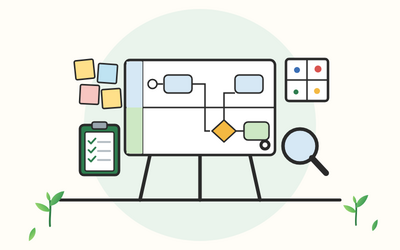
- Process mapping: BPMN-style symbols, simple flowcharts, swimlane maps, mapping the as-is process and its pain points, and designing the to-be process.
- Requirements: types of requirement, writing clear requirements, user stories with acceptance criteria, MoSCoW prioritisation and a requirements catalogue with change control.
- Data and business rules: why data matters, simple data models in plain terms, business rules, a data dictionary, data quality, personal data and reports.
- Options and the business case: finding genuine options, weighted options appraisal, costs and benefits with payback and a three-year view, risks, assumptions and dependencies, and writing the recommendation.
- Working in agile and waterfall projects: planned and agile delivery, the analyst's part in each, hybrid projects, working with suppliers and choosing how much analysis to do.
- Validating the solution and the final project: walkthroughs, acceptance checks with users, the traceability matrix, supporting change and benefits realisation, and a final project to build a full mini analysis pack, with worked answers.
Who it's for
Anyone starting out in business analysis or doing it as part of another role: team leaders, project and change team members, operations and service staff, and people moving into an analyst job. No technical background is needed; curiosity, listening and clear writing matter more. A spreadsheet app is optional.
What this course is, and isn't
This is an introduction to business analysis skills. It isn't a certificate course and doesn't award a qualification, and it isn't linked to BCS, The Chartered Institute for IT, or the International Institute of Business Analysis (IIBA), which are professional bodies with their own qualifications. Official points come from GOV.UK, BCS and IIBA pages read on 2 November 2026; they can change, so check before you rely on a detail. Tools are described by type, not by brand. Every organisation, person and figure in the examples is made up and labelled.