Course description

Have you got a camera with interchangeable lenses or a mode dial, but leave it on Auto because the settings look confusing? This course explains, in plain English, how your camera really works and shows you, step by step, how to take control of it so your photos look the way you imagined.

It's a full course, not a few quick tips. There are 10 sections and 50 written lessons, each with a practical exercise to try with your own camera. You follow a fictional retired postman in Berwick-upon-Tweed through his first year with a camera, with the actual settings for every photo he takes, the mistakes he makes and how he fixes them. Every section has a worksheet, model answers, a cheat sheet and a reusable tool such as an exposure calculator or a blur flowchart.


What you'll learn

  • Getting started: your camera's controls, the first settings to change, RAW and JPEG, and looking after your kit.
  • Exposure: aperture, shutter speed and ISO, what a stop is and how to balance all three.
  • Modes and metering: aperture priority, shutter priority, full manual, metering modes, exposure compensation and the histogram.
  • Sharp photos: autofocus modes and points, depth of field, avoiding camera shake and finding out why a photo is blurry.
  • Lenses: focal length, zooms and primes, what a fast lens gives you and buying second-hand.
  • Light and colour: white balance, the direction and quality of light, flash and simple reflectors.
  • Composition: framing with a camera, focus points, lens choice and telling a story in a set of photos.
  • Subjects: portraits, landscapes, action and pets, night photography and close-ups.
  • Editing and managing: organising and backing up your photos, editing RAW files and exporting for screens and prints.


The final project

You'll plan and shoot a set of 12 photos telling the story of a day or place of your own, using everything from the course, then edit, sequence and share it. A planner, kit list and set sheet are included, along with a lesson on photographing people and places fairly and legally in the UK.


Who this course is for

  • Anyone with a mirrorless camera, a DSLR, or a bridge or compact camera with A, S and M modes who wants to stop using Auto.
  • People who've just bought or been given a camera and feel lost in the menus.
  • Phone photographers ready to move up to a camera. (If you'd like to stick with your phone, our Smartphone Photography course is a better fit.)


How the course works

Read each lesson, then take your camera out and try the exercise. Each section's practice pack has a printable worksheet, model answers to compare with, and a cheat sheet you can keep in your camera bag. You keep lifetime access, so you can come back whenever you need a reminder.

What will I learn?

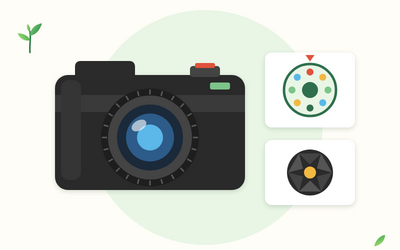
  • Find your way around your camera's controls and set it up properly, including RAW and JPEG
  • Understand exposure and balance aperture, shutter speed and ISO with confidence
  • Choose between aperture priority, shutter priority and manual, and use metering, exposure compensation and the histogram
  • Get sharp photos by choosing focus modes and points, controlling depth of field and avoiding camera shake
  • Understand focal length and choose and use zoom and prime lenses
  • Read and use light, set white balance, and use flash and simple reflectors well
  • Photograph portraits, landscapes, action, pets, night scenes and close-ups with sensible starting settings
  • Organise, back up, edit and export your photos, and photograph people and places fairly and legally

Requirements

  • A camera that lets you choose aperture priority (A or Av), shutter priority (S or Tv) and manual (M) modes: a mirrorless camera, a DSLR, or a bridge or compact camera with these modes
  • Any lens will do; the course uses the kit zoom that comes with most cameras
  • No photography experience is needed

Frequently asked questions

It's for anyone with a camera that has A, S and M modes who wants to stop relying on Auto. You don't need any experience. If you only use a phone, our Smartphone Photography course is a better fit.

Any mirrorless camera, DSLR, or bridge or compact camera with aperture priority, shutter priority and manual modes. The course doesn't favour any make, and explains where buttons and names differ.

No. Everything can be done with the kit lens your camera came with. The course explains what a tripod or a prime lens adds, so you can decide later whether you want one.

Yes. Section 9 covers organising, backing up, editing and exporting your photos, explained in a way that works with whichever editing program you use.

Yes. Every section has a printable worksheet, model answers, a cheat sheet and a reusable tool, and Section 10 has a planner and set sheet for your final project.

No. Every lesson is written out step by step, and every section has practice files to download. There are no quizzes, tests or deadlines, so you can learn at your own pace.

You get lifetime access, with no expiry date. Come back to any lesson whenever you need a refresher.

Yes. You can ask for a refund within 14 days of buying if you've completed less than 30% of the course. Email support@rootlet.co.uk.
Digital Photography for Beginners: Take Your Camera Off Auto

£34.99

Lectures

60

Quizzes

10

Skill level

Beginner

Expiry period

Lifetime

Certificate

Yes

✓ 14-day money-back guarantee if you have completed less than 30% of the course. Refund policy

✓ Secure card payment by Stripe

✓ Questions before you buy? support@rootlet.co.uk

Sold by Rootlet Academy Ltd, a UK company (no. 17529179).

Share this course

Related courses

Learn something new every week

One short, practical tip each Thursday, plus news when new courses open. Free, and you can unsubscribe in one click.

We'll never share your email. See our privacy policy.