Course description
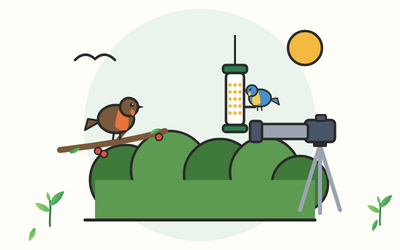
A robin on a frosty branch, a heron waiting at the river's edge, a fox crossing the park at dawn: wildlife is all around you, and photographing it well takes more than a long lens. This course teaches you the settings, the focus and the fieldcraft to take sharp, natural wildlife photos in the UK, starting in your own back garden, and it puts the animal's welfare before the photo every time.
It's written for hobby photographers, birdwatchers and nature lovers using whatever they have, from an interchangeable-lens camera with a telephoto zoom to a bridge camera or a phone. You start with what wildlife asks of a camera: reach, speed and focus. You then learn exposure for moving subjects, continuous autofocus and back-button focus, fieldcraft and hides, the ethics and the law on nesting birds, protected sites and access, garden feeders and perches, birds in flight, water birds and the coast, mammals and close-ups of insects, composition, simple editing and keeping your photos organised. Every technique is shown on a camera and, where it works, on a phone.
There are 10 sections and 50 written lessons, each with a worked example, common slips, questions people often ask and a short exercise to try, and each section ends with a short quiz. You follow Ankaret, a school librarian in Norwich with a camera and a telephoto zoom, and her neighbour Peadar, who uses his phone, through a year of wildlife from the garden to the river and the coast. In the final project you plan a seasonal portfolio of 12 photos from a local patch of your own. Every section has a practice pack with a worksheet, example answers, a cheat sheet and worked examples, plus settings cards, fieldcraft checklists, a seasonal calendar, shot lists, worksheets with answer keys and diagrams drawn for the course.
What you'll learn
- Getting started and the kit you need: what wildlife asks of a camera, focal length and crop factor, how far a phone gets you, cameras and lenses by type, buying second-hand, supports, clothing and a simple kit list.
- Exposure for moving subjects: the exposure triangle with wildlife in mind, starting shutter speeds, aperture and soft backgrounds, auto ISO and noise, metering and exposure compensation.
- Focus, tracking and burst shooting: single and continuous autofocus, focus areas and eye detection, back-button focus, prefocusing on a perch, short bursts and why photos come out soft.
- Fieldcraft: reading habitats, approaching without disturbing, hides and cover, patience, light and time of day, and wildlife through the British year.
- Ethics and the law: putting the animal's welfare first, nesting birds and Schedule 1, protected sites and access, baiting, calls and feeding, and sharing photos and locations responsibly.
- Garden birds and feeders: your garden as a wildlife studio, feeder set-ups that follow the RSPB's advice, natural perches and clean backgrounds, shooting from a window or a garden hide, and a full garden session.
- Birds in flight, water and the coast: settings for birds in flight, tracking and panning, water birds on lakes and rivers, coastal birds and the tide, and seals from a distance.
- Mammals, insects and close-up work: deer, foxes and hares, hedgehogs at dusk and trail cameras, close-up kit and settings, butterflies, dragonflies and bees, and simple focus stacking.
- Composition, storytelling and editing: eye contact and eye level, backgrounds and framing, habitat shots and stories, simple honest editing, and organising, naming and backing up.
- Final project: a seasonal local wildlife portfolio: choosing a local patch, a seasonal plan and shot list, planning cards, an ethics check and field log, and selecting and presenting a set of 12 photos.
Who it's for
Beginners in the UK who want to photograph birds and other wildlife: hobby photographers moving on from landscapes or family photos, birdwatchers who want to record what they see, and anyone with a garden feeder and a camera or phone. You need a camera of any kind or a phone, and to know how to take a photo and copy it to a computer or share it. No experience of wildlife photography is needed.
What this course is, and isn't
This course is about photographing wild animals near where you live, ethically and legally. It doesn't recommend makes or models of kit, and it doesn't cover prices. It never photographs at nests, never uses bait or recorded calls in the breeding season, and never uses flash on wildlife at night. The law on wild birds, protected sites and access is explained in general terms, as read on official UK pages on 1 November 2026; it isn't legal advice, so check the official pages for where you live. Ankaret, Peadar and every other person in the course are fictional.